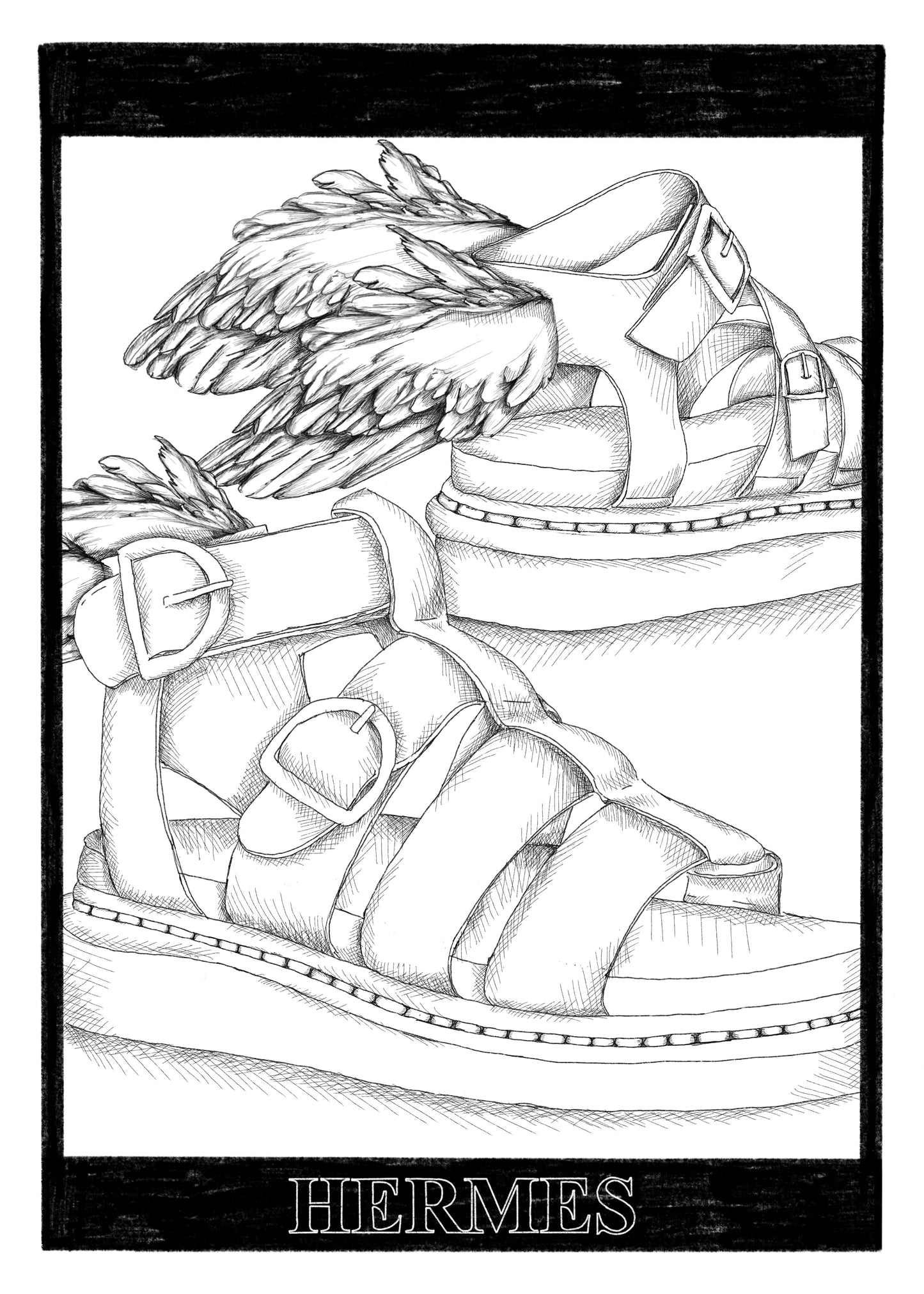

Hermes
Hermes
No god or mortal was as light of foot as Hermes. Messenger of the gods, he embodied the essence of movement and transition. As the protector of all who used the roads, his domain was vast – commerce, trade, medicine, invention, even the unpredictable paths of thievery and tricksters.
Hermes was perhaps best known for his inventive spirit and playful antics. As a young god, he once stumbled upon the empty shell of a tortoise abandoned in a sunlit glade. Holding the shell in his nimble fingers, the gears of creativity began to turn in his mind, and Hermes set to work. He fashioned the shell into a resonant body, the natural shape lending itself to the divine sounds of music. Hermes then sacrificed one of his own cattle, tenderly weaving the bovine innards to form delicate strings. The result was the first lyre – an instrument of such enchanting beauty that it seemed to capture the very essence of divine melody.
Bursting with excitement, Hermes eagerly presented his lyre to Apollo, god of music. Apollo was captivated by the instrument, its delicate harmonies ringing in his ears long after Hermes had ceased to play. Apollo knew he must have the lyre, and so, he offered a trade. For the instrument, Apollo would gift Hermes with the caudecus. The golden staff, its winged crest wrapped with the snakes of protection, came to symbolize peaceful trade and commerce across greece, and its gifting cemented both a mutual admiration between the two gods along with Hermes’ place in the pantheon of divine creators.
As divine messenger, his penchant for chaos often seeped into his duties. Messages between the gods often arrived with twists or delays, and always marred with the fingerprints of the trickster god.
Though he was a true lover of mischief, Hermes was benevolent at his core. When it truly mattered, his swift movements and sharp wit guarenteed the delivery of divine communications. In the end, Hermes always ensured aid arrived to those who needed it most.
Hermes watched vigilantly over the roads and pathways that connected the towns of ancient Greece. His influence was felt in the journeys of bards traveling from town to town, spreading the stories and melodies of the gods. He ensured safe passage for those who journeyed far and wide to provide medical care. Along the roads stood many hermai, mile markers carved from marble as an ode to Hermes himself. These statues marked the path, a guide for those who feared they would be lost. Hermes’ presence symbolized hope and care along the often perilous journeys of those who moved from city to city.
Through every road he watched over, every message he delivered, and every note played on the lyre, Hermes’s character shone brightly. He was a blend of creativity and mischief, guardianship and trickery—a testament to the ever-changing paths of life and the connections we forge. His legacy was a harmonious blend of charm and responsibility, a reminder of the beauty and enchantment that arise from the divine interplay of movement, music, and imagination.