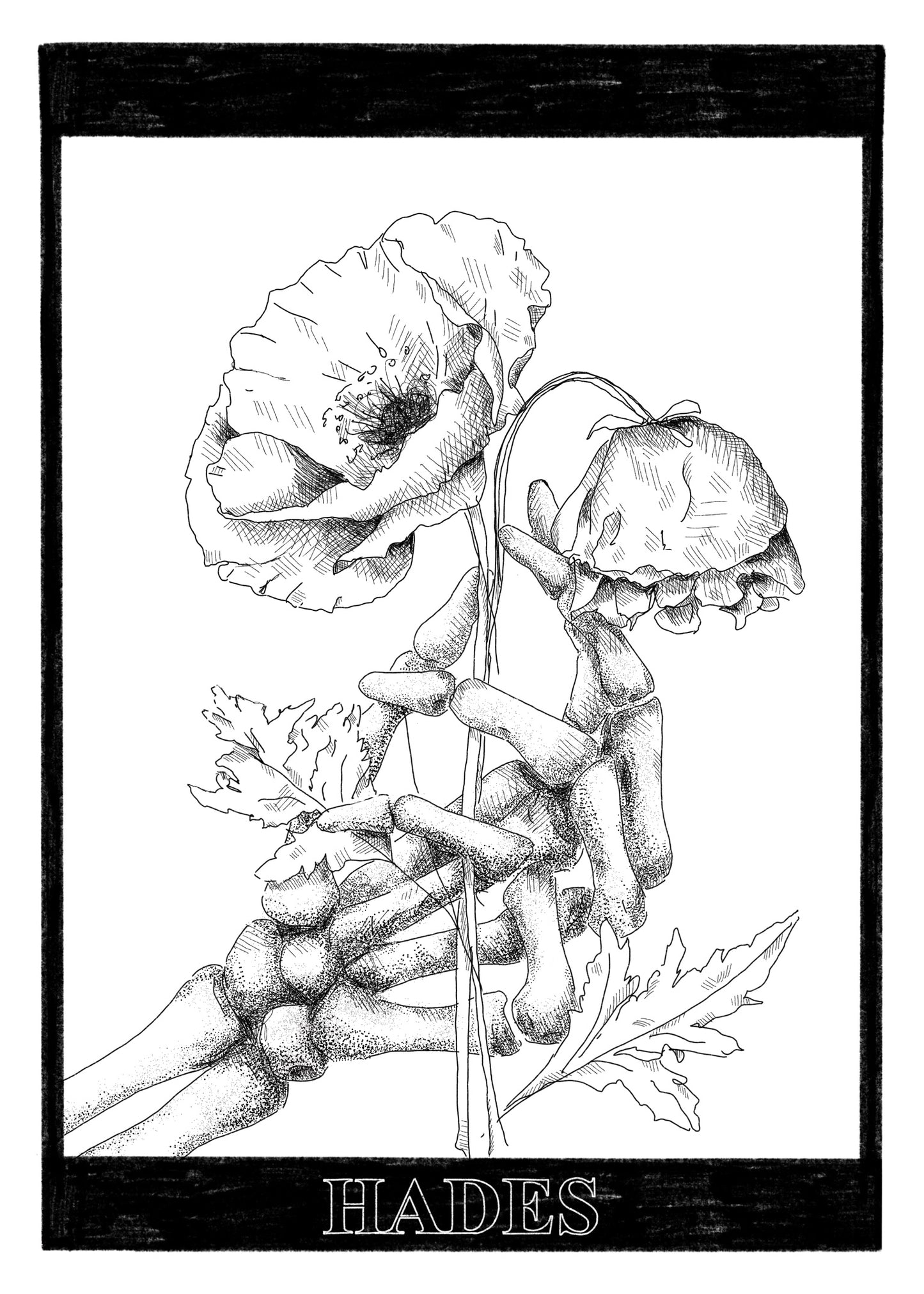

Hades
Hades
All things, living and dead, felt the touch of Hades. In every gem that glittered in a dark cave, every seed that sprouted from the soil, the guiding hand of Hades enforced the cycle. Growth, death, rebirth. His domain, all that is found within the Earth, was as enigmatic as it was essential. Though he is often simplified to the god of death, he represented so much more. Hades ruled the Underworld, keeping a keen eye on all the spirits who passed from the mortal realm above. For the Greeks, death was not an ending, but simply a piece of a greater, ongoing process. A guardian of balance between the living and the dead, Hades was the true keeper of the natural order.
His greatest adversary revealed itself in the form of a mortal man known as Sisyphus, the cunning king who simply refused to die. He cheated death time and time again, besting Hades at every turn. Finally, when it was clear to Sisyphus that he would not escape again on luck alone, he turned to more unconventional means – he set a trap.
With little more than a hunch that his plan would even work, Sisyphus sacrificed one of his men. He pushed the guard off the tallest cliff in Corinth. As he heard the body hit the earth below, Sisyphus launched into action. He raced down the cliffside, just in time to see Thanatos, the embodiment of Death itself, arrive to claim the lost soul. Sisyphus leapt at the god from behind, knocking him down and chaining him to the cliffs. Death had been captured and bound.
With Thanatos chained, no mortal, let alone Sisyphus, would face mortality. This, Hades could not allow. The world fell into chaos as dying itself became impossible. The sick kept getting sicker, the injured laid suffering, and the wails of their agony echoed across the planet.
Hades hunted Sisyphus to the ends of the Earth. The wiley man slipped past him again and again, but Hades was persistent, as death often is. Eventually, just as all living things one day will, Sisyphus faced the god of the underworld.
Now, cornered, the once-brave Sisyphus shook like a scared dog. Hades condemned him to the Fields of Asphodel, where he would endure his eternal punishment under the god’s watchful eye. Hades crafted a torment to reflect the sin – Sisyphus would push the same boulder up the same hill, day in and day out, forever. He repeated his task endlessly, never quite making it all the way to the crest. As soon as he saw the curve of the hilltop, his footing began to slip, and the boulder rolled back to the base of the hill, beginning his trek again. A cycle of torment befitting of a man who had so desperately tried to escape the inescapable, and now, he never would.